Grading and Site Preparation in Ottawa
Pads, swales and subgrade shaped so the surfaces above them stay where they were put.
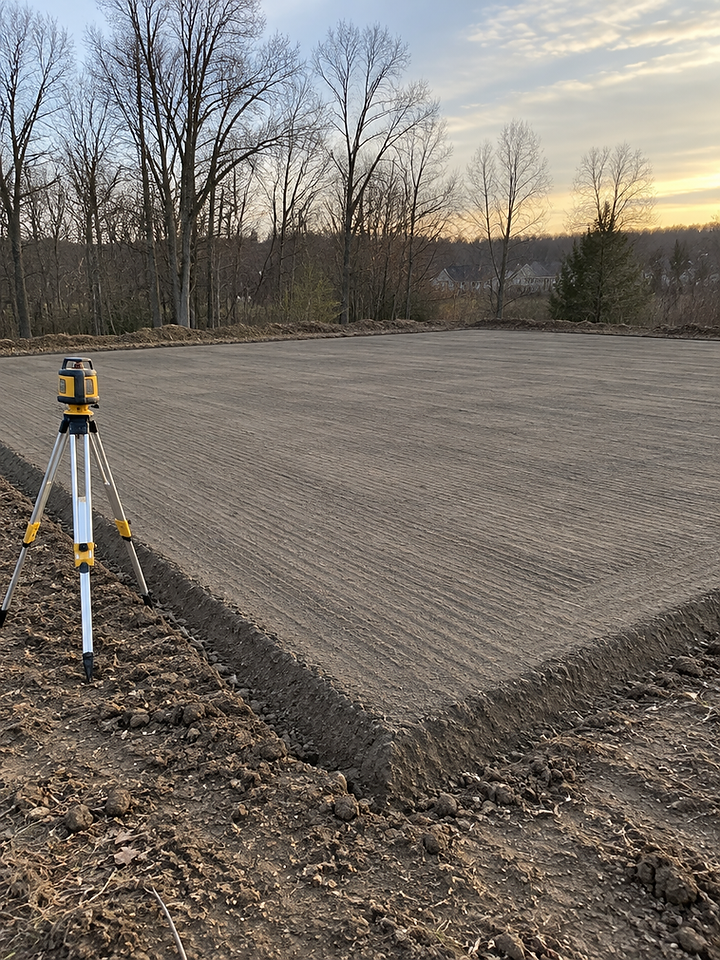
Grading is where the excavation stops being a hole and becomes a lot. The elevations set here decide where water goes, how a driveway drains, whether a patio holds water against the house and whether the ground under a slab is firm enough to stay that way.
STA 01 / Included
What the work includes
Rough grading shapes the site to the design elevations: cutting where the lot is high, filling where it is low, and forming the swales that carry surface water to the intended outlet. Building pad preparation takes the area under a future structure to a level, compacted base. Finish grade brings the surface to its final relationship with the building, ready for topsoil, paving or planting.
Driveway preparation falls in the same scope. That means stripping the organic layer, shaping the subgrade to the right cross fall, compacting it and placing granular base material in lifts where it is part of the work. A driveway is only as good as the material under it.
On a commercial or larger residential lot, the grading also covers the positive drainage around the building, the tie in to municipal infrastructure where that exists, and the shaping of any parking or hardstanding areas.
STA 02 / Planning
How grading is planned
The starting point is a benchmark and a set of design elevations. From there, the lot is walked to identify where water currently goes, where it should go, and what sits in the way: a neighbour's grade, a municipal ditch, a storm connection, a retaining wall, a mature tree with roots at the surface.
Cut and fill are balanced where possible. Material cut from a high corner can raise a low one, which reduces haul-away and keeps the site's own material working. Where the balance does not work, the surplus leaves and the shortfall is imported, and both are part of the scope.
Compaction is planned in lifts rather than in one pass. Fill placed in thick layers cannot be compacted through its full depth, and the result shows up as settlement under a slab, a driveway or a patio a season later. Moisture content matters too: clay that is too wet will not compact, no matter how many passes the machine makes.
STA 03 / Ground
Frost, clay and Ottawa lots
Frost heave is the reason grade and drainage are treated seriously here. Water that sits in the subgrade expands when it freezes, and a surface built over a wet, poorly drained base will move. The grade is shaped to shed water before it can accumulate, and the subgrade is protected from the weather as the work progresses.
Ottawa's clay soils hold water and drain slowly. They also rut badly under machine traffic when wet. On a clay lot, grading in wet conditions can do more harm than good, and the sequencing is arranged around that rather than against it.
Lot grading also has to respect the neighbours. Changing the grade on one property can redirect water onto another, and municipal lot grading rules exist for that reason. Where a new grade is proposed, the relationship to the adjacent properties is checked before the material moves.
STA 04 / Timing
When to schedule
Rough grade belongs as early as the building allows, because it opens up the site for the trades that follow and gets water moving away from the foundation. Finish grade comes later, once the surfaces above it are about to be installed, so that it is not damaged by other work.
The best window for exterior grading is from late spring through early fall, when the ground is workable and the weather allows compaction to be done properly. Grading booked late in the season risks being left unfinished over the winter, which is hard on a bare clay surface.
Related services
- Foundation Excavation in OttawaFootings and foundation walls dug to a marked layout, with working space left around the forms.
- Land Clearing in OttawaBrush, small trees and stumps removed so the lot is ready to excavate.
- Drainage and Weeping Tile in OttawaWeeping tile around foundations, swales, catch basins and outlets in general terms.
- All services
STA 05 / FAQ
Grade questions
Rough grade sets the shaping of the lot: the pad elevation, the swales and the direction water runs. Finish grade is the final surface left for topsoil, sod, paving or landscaping, and is usually completed by the trade that installs those finishes.
The grade is set to fall away from the foundation on the drawings and checked with a level, with swales shaped to carry water to an outlet. The check happens before the surface above it is finished, because correcting it afterwards costs more.
It depends on the condition of the ground. Frozen material cannot be compacted properly, so pad preparation in winter is limited. Work scheduled between the thaw and the freeze up is more reliable.
Yes. A driveway built on uncompacted fill settles and cracks. The subgrade is prepared and compacted in lifts before the granular base goes down, which is part of the grading scope rather than the paving scope.
STA 06 / Start a project
A lot that needs shaping?
Send the lot details and what the surface will become, and we will confirm the grade work involved.