Demolition and Haul-Away in Ottawa
Small structures down, slabs broken, material removed, and a lot left clear enough to start again.

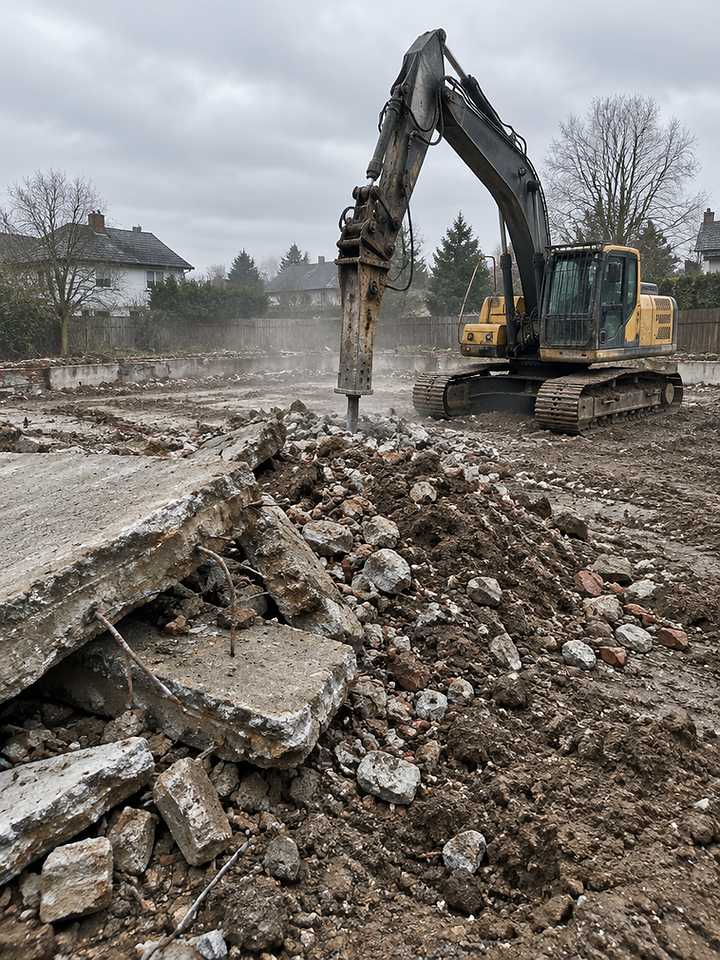
Demolition on a residential lot is usually the small end of the work: a shed that has to go before a garage is built, a deck and its footings, an old slab in the way of a new driveway, a fence line removed for access. The task is to take it down safely, sort what comes out, and leave the ground ready for the excavation that follows.
STA 01 / Included
What the work includes
The scope covers taking down small structures, breaking up concrete slabs and pads, pulling out fence posts and footings, and loading the material for removal. Where a structure has services connected, those are disconnected by the appropriate trade before demolition starts.
Haul-away is part of the job, not an afterthought. Material is sorted as it comes out so that clean concrete, wood, metal and general waste can go to the right place. Leaving a mixed pile on a driveway for someone else to deal with is how a demolition project turns into a longer one.
At the end, the area is cleared back to the ground and rough graded so the next phase can begin. Old foundations and buried footings that would interfere with the new work are removed rather than buried.
STA 02 / Planning
How demolition is planned
The first step is confirming what is being removed and what stays. A garage attached to a house, a shared fence line or a structure close to a neighbouring building all change the method. The site is walked, the limits are marked, and the sequence is set out before anything comes down.
Services are checked next. Hydro, gas, water and communications connections to a structure are identified and disconnected before demolition. Locates are cleared so the machine does not find a buried line with a bucket.
Then comes the question of material. Volume decides how many loads leave the site, and the composition decides where they go. Concrete, clean fill, wood and metal are handled differently, and the plan accounts for the space needed to sort them on a tight lot.
STA 03 / Ground
Dust, clay and neighbouring lots
Demolition generates dust, noise and vibration. On a lot close to a neighbouring house, the sequence is arranged to limit how long the work is at its loudest, and water is used where dust is a problem. Clay ground turns soft under repeated machine traffic, so the route is protected or limited.
Frost affects the takedown less than the removal of buried material. Frozen ground makes slab and footing removal slower, and a frozen stockpile is harder to load. Demolition in the colder months is possible but the work is planned around the ground conditions.
Where a structure sits close to a property line, the direction of fall and the working space are set out carefully. On tight lots, structures are taken down in pieces rather than pushed over, which takes longer but keeps the work inside the property.
STA 04 / Timing
When to schedule
Demolition should be scheduled before the excavation, grading or new construction that depends on the space being clear. Doing it early also gives time to deal with anything unexpected that comes out of the ground, rather than discovering it on the day the machine is booked for something else.
A removal that has to happen before a sale, an inspection or a permit condition has its own deadline, and those are worth mentioning at the start so the sequence can be built around them.
Related services
- Basement Excavation in OttawaFull and partial basement digs for new homes and additions, with spoil placed where the lot allows.
- Grading and Site Preparation in OttawaRough and finish grade, swales, building pad preparation and driveway shaping.
- Land Clearing in OttawaBrush, small trees and stumps removed so the lot is ready to excavate.
- All services
STA 05 / FAQ
Demolition questions
Small structures such as sheds, garages, decks, porches and fences, along with slabs, pads and old foundations. Larger buildings and anything with structural or hazardous complications are assessed case by case before any commitment is made.
It depends on what is found. Materials such as asbestos, fuels, oils and other regulated items need specialist handling and are not part of this work. Where they are suspected, they are identified before demolition starts so the right contractor can deal with them.
Usually yes, when the site is being prepared for something new. Leaving an old foundation or slab in place creates a problem for the next excavation or the next grade, so removal is part of the conversation at the start.
It depends on the scope. Haul-away of surplus material can be included, with the material sorted as required and taken to an appropriate facility. What is included is set out in the scope before work begins.
STA 06 / Start a project
Something has to come down?
Tell us what is there and what the site needs to become, and we will confirm the takedown and removal.